Book Essentials - No More Mr. Nice Guy
Dr. Robert A. Glover discusses an issue that has become an epidemic among young men and is one of the books I wish I would have given to my teenage self earlier.
BOOKS & LITERATURE
Abhaas
5/19/20263 min read
No More Mr. Nice Guy :
I briefly remember going through teenage and experiencing typical teenage feelings of frustration, rebellion, love and heartbreaks coupled with occasions of extremely low self esteem. One fine day, while watching sitcom FRIENDS - i noticed a line "Nice guys don't always finish last" (trivia lines were written on door board of the the boy's apartment in the sitcom - different per episode).
Being called a nicest guy around by most people I knew; it intrigued me. So there i went over the internet and researched about it. Turns out that the real line was "Nice guys Finish last" which painted the picture that the guys who did what needed to be done, no matter how ruthless were always ahead of guys who just tried to be nice.
In this moment, I told myself - I'm no pushover, I need to be not nice; but how? So after further googling, the book No More Mr. Nice Guy by Dr. Robert A. Glover peeked my interest mainly due to it's real and rave reviews all over the internet. I told myself, let's do this.
Misconceptions and Hard Hitting Facts:
As I started the book, it impacted me instantly. I wasn't able to believe that someone who has no idea about me or my situation can describe me so accurately (needless to say I believed I was different - like every teenager). This was one of the books that changed my life and probably why I'm writing this blog to recommend this masterpiece.
The book teaches how to be a bad guy, a jerk - this is the biggest misconception. All the book talked about was how nice guys fooled themselves by hiding their true nature in pursuit of making everyone happy and end up being a guy with suppressed feelings.
Are you truly a nice guy?
I'm not saying every nice guy is a problem, there are genuinely nice guys in this world who don't hate themselves for anything, believe in collective good and are true to themselves.
But majorly, most of the nice guys we see are liars - who lie to themselves on a daily basis.
So do you recognize these behaviors in you or someone you know?:
Seeking validation from relationships
Feeling guilty to prioritize themselves
Hiding Flaws to appear perfect
Becoming resentful when their efforts aren't appreciated.
Or someone who believes "If I'm good enough, helpful enough and agreeable enough, people will love me."
Then they might be a nice guy suffering from nice guy syndrome. As these feelings are almost driven by FEAR.
Fear of conflict
Fear of abandonment
Fear of not being good enough
When these fears realize themselves in reality and expectations fail - it creates emotional turmoil. People fail to understand that they are themselves responsible for their feelings or what they would do about it instead of blaming external factors.
What the book teaches:
It encourages people to
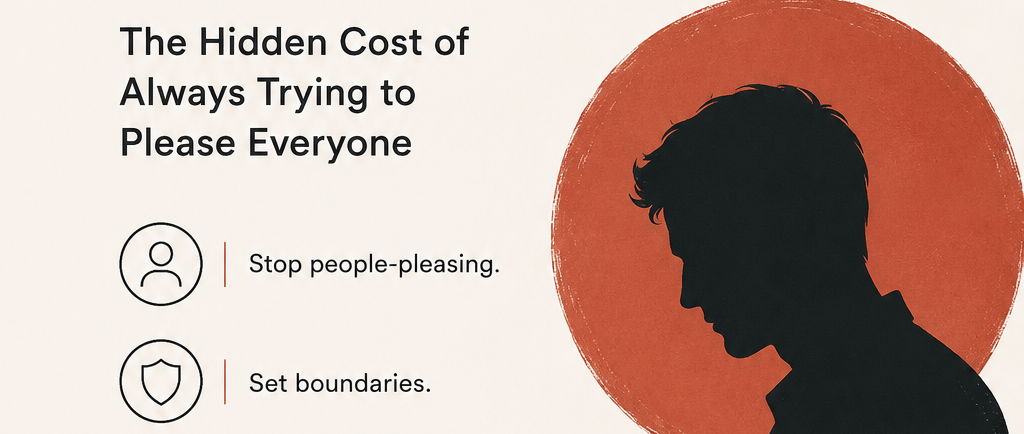
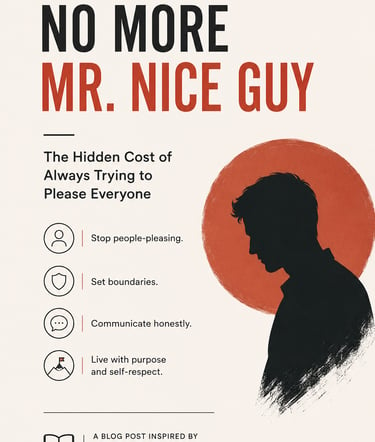
Build Self respect, communicate honestly.
Stop seeking constant validation, say no without guilt.
Set Clear Boundaries, accept that not everyone will like them.
Pursue purpose and goals.
Becoming comfortable with failure and rejections - make them stepping blocks.
None of these actually make you appear selfish, it helps you to become more authentic.
Key Giveaway:
We cannot build a healthy life while constantly pretending to be someone else. People pleasing and avoiding conflicts are temporary reliefs but does more harm than good in the longer run.
Real confidence comes from honesty, Real respect comes from authenticity and real growth comes when we stop living for approval of everyone.
Ask yourself, are you genuinely kind or simply afraid of disappointing people?
P.S It has been long since I read this book, so I'll give it a re-read again (meaning of the book changes every time you re-read it). And yes, though the book feels gendered - it something I'd wish people make their daughters read too, as the book might be gendered but teachings are not.
If you want to read it - attaching a link for you - Here
Connect
Join the conversation on raising strong men.
Subscribe
abhaas.saxena@menofthedyinbreed.com
© 2025. All rights reserved.