
Life Skill - Tourniquet
Tying a tourniquet is one of the most basic skills we can acquire and save lives.
SKILLS
Abhaas
4/15/20262 min read
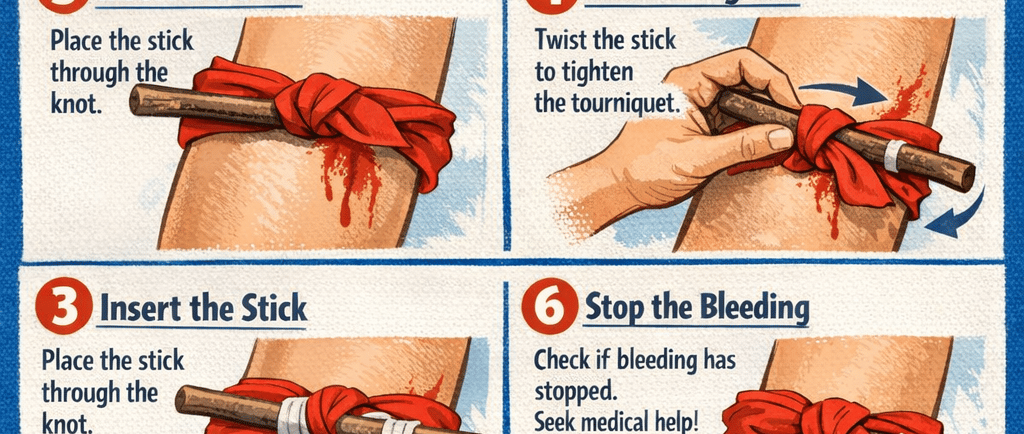
Suppose you are hiking on a mountain and are attacked by an animal or in caught in cross-fire of a fight or worse- amidst war like situations and one of the people in your vicinity are hurt and blood is flowing through their wound, what would you do? This is where learning how to tie a tourniquet comes in.
Statistically more people die due to blood loss rather than directly from the wound and soldiers around the world have a tourniquet in their kit to prevent blood loss in crisis.
Some people are aware of the tourniquet but use it as a last resort, as they fear using a tourniquet might lead to future amputation of the limb. Data has shown that this is not true and applying a tourniquet doesn't mean the limb would be amputated - yes, there has been instances of amputation but it is very low compared to actual tourniquets being used.
Worst case scenario? Amputation is still better than losing a life. Now if we are not carrying a tourniquet, how do we use an improvised tourniquet?
Step 1: Make sure your surroundings are safe.
It is essential to check your surroundings are safe and if someone is around - ask them to call emergency services asap.
Step 2: Expose the wound
Tear any cloth or substance that covers the wound, the wound should be properly exposed.
Step 3: Firm pressure on the wound
If you can carry nitrile gloves, it would be a great time to use them now. Nevertheless, find a cloth and apply firm pressure on the wound - so the blood flow is reduced. If the blood flow doesn't reduce - jump to step 4.
Step 4: Find a nearby cloth & an anchor
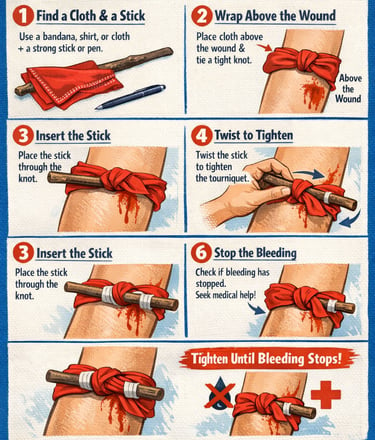
We need a cloth to tie up the wound and would need something as an anchor to tighten the wound. This anchor could be anything like a wooden stick to a pen.
Step 5: Tie the cloth
Tie the cloth 2-3 inches above the wound (towards the body) with a cross knot. Make sure you do not tie it on the wound or a joint and it should hurt i.e must be tight.
Step 6: Apply the anchor
Tie another cross knot but use an anchor(wooden stick) between the knot this time. after applying the knot, twist the anchor so the cloth is further tightened - till the blood flow completely stops. At this time also analyze if the victim has not gone into a shock.
Signs of a shock - pale or blue skin, rapid breathing and unconsciousness. If they have gone into a shock - cover them and keep them warm.
Step 7: Call emergency Services
Incase, there was no one with you in step 1 - now is the right time to call emergency services.
That's it, Tying a tourniquet is not very difficult but could save someone's life - I urge you to check youtube on how tourniquets have saved lives and is something so basic that everyone should know and practice.
Also, I'm happy to announce that we have launched our first merch - follow the link bellow
Connect
Join the conversation on raising strong men.
Subscribe
abhaas.saxena@menofthedyinbreed.com
© 2025. All rights reserved.